
Seeing Around Corners: Product Vision and Where the World Goes Next with Gib Olander
Gib OlanderJune 16, 2026
Product leader Gib Olander on building with AI agents, the discipline it demands, and why experience beats youth in the AI era. with George Leith.
Transcript
George Leith: Conversations with the operators, founders, and leaders doing the slow, hard, beautiful work of becoming who you always knew you could be. I'm George Leith. Let's get to work Gib, really excited to have you on the show. Um, as I mentioned off the top, we've known each other for a long time and, um, you know, it, it's the theme of this podcast is all about evolution. And as I was getting prepared to, to ask you all these questions and try and extract some of that wisdom that you have, um, I think back to when you and I first met, um, and watching the evolution that you've went through, uh, because we're, we're recording this... I wish that I was recording this episode in California, but I'm not. Uh, that's just the background. But you, your life has, has changed quite a bit since you met me. Um, and, and I think we're talking you might be in Tennessee
Gib Olander: Absolutely. We have gone to, uh, rural Tennessee, Stewart, Tennessee. It's out on a huge lake, Kentucky Lake. Uh, I always had the dream of building kind of my dream house out on a lake in a rural part of the world. And, uh, my kids graduated college. We raised them in the Chicagoland area, which is where I was when we met and when we've always talked and many times when we've met. Uh, spent a little time out on the, the West Coast, out in Spokane, in the Idaho area, just beautiful area, but, uh, wanted to be in the middle of the country. And so now, uh, are-- I'm luckily living out in, uh, uh, Tennessee.
George Leith: Well, and I, I think I remember, you know, you and I were at a- an off-site when we had the... I- I call it a privilege of working together, and you were telling me about your plan to move out of Chicago and, and move to Tennessee. And, you know, let- let's-- I wanna start with that. Like what led to that? That's a massive change. Like what led to that change?
Gib Olander: Yeah. So, um, uh, you know, as a product guy, I'm always kinda trying to forecast what the future's gonna look like. And, um, I've been so blessed in life, George, that I've got a set of kids, and anybody that knows me knows I talk about them all the time, but they, they have been the central focus of my life for the last 24 years. And, uh, I am so blessed to have a great relationship with them. It's my favorite thing in the world. Uh, but when they were-- went off to college, my wife and I, who had lived in the same house and had raised them for, you know, basically 20 years, uh, and, uh, they were sophomores in college and, and maybe I'm a, maybe I'm still a bit of a hard ass, uh, excuse my language there. But, you know, in my mind's idea, and this isn't for everybody, but this was my idea, that it's not right for the kids to come back and live with us. They need to get off on their own and do their own thing. And we were really fortunate to have... And th- this does tie into evolution, right? Of evolution of life and stages of life that we're in. And so the kids were off to college. Meg and I were starting to learn new ways to live together and work together and, and started life in different, different, different way to spend our energy. Uh, and so I asked her kind of quite frankly, 'cause I was thinking, "If I don't do something about this house now, it's gonna be really easy for the kids to feel comfortable and come back and go to their bedroom and have their life sort of stay in the same cycle that they were in." And so-- And that was gonna leave me, right or wrong, that I was gonna-- it was passively aggressively gonna bother me, and it was gonna hurt my relationship with my kids 'cause I was gonna make it uncomfortable for them to be there, and I was gonna drive them away from me. So I thought to get ahead of that, we need to make a life change. And so this is kind of a morbid question, but I asked my wife, I said, "Do you think we're gonna die in this house?" And, and, you know, she, she wasn't thinking about this stuff at all, right? Like, you know, but it, it, it shocked her a little bit. But, you know, the house was 20 years old. It had been new construction, but it was gonna need a new roof, and it was gonna need a new furnace, and it just all those things. And this goes with a lot of phases in life where things get to a maturity stage where you have to start rebuilding them, whether you liked it or not. And so we both kind of shook our head and said, "No, I think we've got other dreams that we could have." And I said, "Well, then we need to figure out what that looks like, and we should get this house on the market." So we had an estate sale. Emotional as, as you can be when you start selling all your stuff. But I had looked around our house and had seen this idea that it was filled with ghosts. Now, they were beautiful ghosts. These were Caspers. These were friendly ghosts, right? But every nook and corner was where I raised my kids and read, you know, Dr. Seuss books or put 'em to bed or played basketball in the rain with my daughter and, you know, things that were beautiful. But my brain would always be forced to think about the past instead of invent and build the future. And so I needed to get myself into a new environment where I wasn't s- sucked back into the glorious past, and everywhere I looked became possibility of what it could be and what I could build or what I could make. Uh, and so we sold all of our stuff. We downsized into a condo, and we started to look at what life might look like for the next however many years. And, uh, a- and so, you know, fast-forward, we went through those moves and w- we found some land, we did some research, started building the house, moved through some jobs. You know, kids, blessed, graduated college, doing really well. They're both on their own. They have their own houses. They're, they're living their own lives in Chicago. By, by all accounts, George, I'm blessed, and it's worked out, but it's been hard. Evolution and change is always hard, and there's something that I say as often, which is There is no growth without pain. Anything that grows, if you grow as a teenager, it's painful, right? Your bones hurt, right? I- if you grow in your career, it's hard. You have to grind and learn and, and make effort. And so I feel like I've been blessed in going through a stage of growth and, and my kids as well, but it's been painful at times for sure, but, uh, I'm, I'm in a happy place right now.
George Leith: Well, I have to say, there is not a lot about this show that's scripted. In fact, I don't think there's anything that's scripted, and that's just the way that I like to operate. But I knew asking that question that I would get a response similar to that because you and I have been through various scenarios in our time together and, and it's really interesting to me. Now let's unpack what, what you talked about there because it was very strategic, and folks that are w- watching this show or listening to this show, Gib is one of the best product guys I've ever met in software. Um, and where you and I aligned was you're also a sales guy. Um, and so, you know, you helped me out with, with that alignment of sales and product. But that sort of strategic thinking, were you, were you born that way? Did you become that way? Like, how did, how did you get to that point? Because that whole, uh, the, the whole narrative that you just explained as to how you ended up in Tennessee was very strategic. Like very strategic and very forward-thinking, and I think that you're gonna be a great product person. You have to think that way or it's probably not gonna work out for you. So how did, how did that happen? How did you get to be this version of Gib O- Gib Olander?
Gib Olander: Yeah. Uh, it's been learned and earned for sure. Um, it, it, it didn't come naturally. I was a, w- what maybe I would call early in my career as a charismatic salesperson, right? I mean, I sold insurance door to door, George. Like, you wanna learn, you wanna learn how to become a salesperson, you start knocking on doors and sell accidental indemnity insurance in Rockford, Illinois to make a living. Like y- you learn some sales chops doing that, I tell you. You know, a- a- a- and so, um, a- and I did that by based on being, you know, willing to talk and make a joke, and I, and I used to believe that it was, a- a- and I've told this story before, but, um, a- and it's interesting. There was a book, um, that a boss gave me, and, and my whole evolution has come from reading books, 100%. I know it's just like you. Every... One of the things I admire most about you, George, is you have been a lifelong learner, and the evolution that I have watched you go through and the way that you pick up in your mind of trying to grow has been one of the most impressive and enjoyable parts of our friendship to watch that happen. And so, you know, um, I, I know you'll relate to this. But th- there was a book that was really famous, uh, called, I think it was called The Red Sales Bible or The Sales Bible. Do you remember that book? Have you ever seen that one? It's a- I don't. No, I
George Leith: don't.
Gib Olander: It's a little red one, and we should look at what the name of it is 'cause it's worth people picking up. But in the book, it said this, it had this one little section that just changed everything about me We're old. Newspaper used to be a big thing. I used to read every newspaper front to back so that I had a little nugget to talk into everybody, 'cause the ideal used to be in sales, make a friend, make a sale. And so I wanted to be witty, I wanted to be on top of it, I wanted to be able to have-- to build rapport with every person that I met. Now, this book said, uh, and, and there something to the long lines, and I'll paraphrase. It's been 20 years since I read it, but it's impacted me to this day, is that, uh, how many sales have you really made because you made a friend versus how many sales have you made because you were the most knowledgeable person about your product? And I went, like it wa- all that time that I was reading the article in the newspaper about the movies and about dinner and about the sports teams was not nearly as valuable as all the time that I spent reading and learning about my product or my customer's problem or, or the pain that they were suffering, right? And so I became a student to get deeper into the thing that could pay my bills That change made me become more strategic, right? Because it starts to open up all the things that you don't know that you need to spend time to learn. It starts to present all the areas of like... And, and boy, anybody that's ever feels like they've become an expert on anything knows this feeling, where all of a sudden somebody that asks you a question that they think they're really knowledgeable, and it's based on so many false premises that you're, you look at them like they've got a third eye. And, a- and then you know how many times you've done the same thing in other areas where you're not the expert, right? So um, so let me fast-forward a little bit on that, right? So I read that book, I start diving deeper into how to solve problems. What are the most fundamental ways to solve problems? What are the frameworks that you use to solve problems? How do you start to do all those things? And those are the skills that you need to become a product manager. But in today's world, in AI, I think they're the skills that you need to be successful in an AI-driven world. I think, again, when you're a hammer, everything looks like a nail, but I think it's a world where everybody needs some product discipline in their life in order to take advantage of the opportunities that AI presents itself. So, uh, I gave myself an MBA through a variety of s- books. Every business book that ever came out, every Silicon Valley book that ever came out, every product book that ever came out, I read them all diligently for a good eight to 10-year period and still keep up on them today. Uh, and that completely transformed me as a person and as a professional, uh, o- of diving into those things.

George Leith: And one of the things that, you know, preceding this show, I had the Conquer Local podcast for five years, had the privilege of interviewing lots of very, very successful business people, and what you just mentioned seems to be one of the recurring themes, is that people who've been enormously successful in their careers and continue to produce success, because we usually don't have... We're not-- It's not our dad's world where we have one job now, right? And we work it for 35 years. And, um, uh, they, they are consuming an enormous amount of information In, in order to make those strategic decisions to move things forward. Um, and, and it's also funny how they always say... I, I watched, uh, someone be introduced on stage the other day at a event I was at, and they were introduced as an expert, and they talked about all the great... And that's, you know, we, we do a little bit of that on this show, but I just wanna get right into the interview because that's where I think people are gonna get the most inform- I could talk about all the great shit that you did. Uh, but also the listeners could too. They're probably Googling it right now, checking out who you are. So let's just get right into the meat and potatoes, that theme of constant learning. So now let's go back a, a few months ago. Before I have spent tens of thousands of dollars on tokens on AI, and, uh, my wife is wondering what the hell I'm doing at night on my laptop all night, and fall asleep with the laptop on you, and wake up in the morning, because I've been digging into AI deeply because I'm probably more paranoid about something taking out and making me not relevant in my role, and that's this bloody AI thing if you don't learn it. And guess who was one of the first people that got me spurred into that was back a few months ago when you phoned me and said, "Hey, uh, try this thing out. I built it from end to end. Um, and, and I know you've been a product guy for a long time, but I'm pretty sure that you're not writing code," so you probably did it with AI, um, which I found out afterwards. So let's, let's talk about that. And I knew we'd get there. I didn't know it would be this fast. But AI, you're one of the, the people that I would've expected to jump on the bandwagon very quickly and, and learn about it, and you've built some cool stuff. So can we talk a little bit about your experience with that? And, and maybe, um, you know, part of it scares me, uh, but not enough that I'm, I'm not gonna jump into it. So I don't really think that the robots can take over the world kind of shit. But I... It, it does concern me a little bit that, you know, what, what's it gonna do? What... In your crystal ball gift, what do you think this thing might do, and, and give us a little bit of learnings you've had early on here with, with this amazing technology that's at our fingertips?
Gib Olander: Yeah, there's a lot there. Um, I want to acknowledge that there is risk involved. Um, there's, there, there are some things that we don't know the answers to, and all of that needs to be deeply studied and thought through and understood. I'm not gonna come to it from that perspective. I like to be on the cutting edge of things. I like to push the envelope of what's possible with technology. I believe that technology makes the pie bigger, doesn't shrink the pie. I think you could look at the, you know, at, at one point in time, everybody in North America was a farmer, right? 'Cause you had to eat, right? So you, you're either a farmer or a hunter, right? Everybody's job was hunting or farming at one point in time, and technology has made it so there are very few hunters and farmers, and yet we all still eat, right? And so, uh, at the very base level, you can think about technology as an evolution there. And that's all debatable, and I'm sure there's angles on that, but that's the fundamental place where I'm gonna start So I found myself as a, a, a leader of a, a really large organization. Uh, you know, we took it from $200 million to $600 million. It was-- went from 800 people to 1,800 people in a matter of three years. And I found myself as a chief product officer really being a bureaucrat. It was all about process and org charts and systems thinking and budgets and HR reviews And that is for some people, I kept looking at this AI thing and I thought, "I need to find a way to spend more time to actually use it." I am much more of a... A-and I think AI is really this way, and I think you'll agree, it's more of a Montessori learning than a lecture learning, right? Mm-hmm. You have to get your ha- you have to find something that you're interested in, that you know a lot about, and you have to get your hands on and get dirty and fumble through it like a kindergartner at a Montessori school, and then get passionate about it and spend a lot of time on it to get good at it and to learn what it is. You can't just read the headlines. You can't just read the articles and the press releases. If you don't use it, you will not learn it. And so, uh, uh, was talking about Montessori, but, but I did go back to school. I took a class out of Stanford, right? Like I went to where I think the, the beginning of it is, and stepped away from my bureaucratic chief product officer role and said, "I'm gonna go be a builder again." The opportunity to write code has never been stronger than it is now, whether you know it or not. I had not written code in decades. I barely understood how to write, write it. Um, I could read it and keep track of it and help teams with it, but did not know how to write and did not write a lot of code, uh, 18 months ago. Today, I've got a new product, and this isn't the podcast product. I'll talk to you a little about that. But the product that I've been leaning into the most is GoodLeads.Club. And today I have a team of agents, uh, nearly 50 of them, that work kind of in an OpenClaw version, but it's not actually OpenClaw. But, and, and lines of code is not necessarily the number one prog- you know, indicator of great progress. But to give you a sense, I'm writing about 60,000 lines of code a week, uh, that, that I am doing through my A- through my AI agents, and they all work with me on the platforms that I like to work with. So when I led a lot of teams, it was all about following up on Jira tickets and Google Docs and running standups and using Scrum and Agile and all those principles. I use all of them today in my agents. I get a standup report from, uh... So GoodLeads.Club produces, uh, uh, formation grade data. So we identify when people start new businesses within days that they start it, so it's about 180 days earlier than anybody else can get to that data. So, uh, great time to sell leads. If you remember New Connects data or New Mover data, it's like that, except it's just businesses. But, so every state has their own data problems, so I have an agent for every state. Every service that Help works that as a matrix works across. I meet with them on a daily basis through Google Docs, where I make comments, I hit approve. Uh, they re-write it down into a wiki, so they learn and get smarter every day. And, uh, they are building this product just faster than any development team that I've ever worked on before. Uh, so-
George Leith: Can I, can I layer in on that for a second? Please. I mentioned in my rant to tee you up for that because I was hoping that you would go there. I mentioned tens of thousands of dollars in tokens, and it's, you know, a little hyperbole there, but it's definitely more than $100 because my wife reminded me on the credit card the other day, she's like, "What's all these charges?" And, you know, you know, bless her, she said, "Well, it's like you went to school." Um, because without you burning those tokens, I wouldn't have figured out what was working and what wasn't working. Um, and like you, uh, you're, you're way further ahead. I'm in the rabbit hole. I got agents. I've got my own chief of staff. I now have a CFO that's looking after my finances. I've got a lead gen agent. I've got all these agents. And for folks that are listening to this show that don't... Like my mom, who doesn't know what an agent is, we're not talking about a secret agent or anything like that. We're talking about a, a virtual, uh, silicon agent that you've tasked with a job, and you literally have a staff meeting with that individual. Is, am I picking that up right?
Gib Olander: I literally follow the same agile principles that I did with development teams. So I run stand-ups, I have retros, I do sprint planning, uh, we do sprint reviews, uh, that I do with my agents 'cause I was managing 50 plus product teams, right? Like, so I know how to work across that scale and keep them moving and productive. You know, uh, one of our-- my mentors that was when we were, when we built Localize and invented that kind of business identity management space, uh, we did that at a company called TargetInfo, and the founder of that was George Moore, and he used to say he loved scalability, and he used to say, "I love anything that is silicone-based employees versus carbon-based employees." Now this was 25 years ago, right? Like, um, but to your point, I find that both organizational design and our Scrum and Agile practices actually work exceptionally well with an agent organization and the amount of work that you can get done and the quality of work that you can get done is higher and actually better than anything I've done with, you know, with th- literally thousands of engineers.
George Leith: As we continue to meet great folks like Gib, you're, you're gonna hear this theme and I, I want... I'm hoping that in the AI portion of Evolve Pros that we continue to highlight that because I, I was fortunate enough to work at a software company for 10 years, so when somebody says Sprint and Agile and Scrum, I, I kinda understand that. But what I found was I actually picked up on a hell of a lot more of it than, than I knew because with that structure, I've been able to create some pretty cool stuff like the Evolve Pros platform that all of our subscribers are able to utilize. Um, those-- it's all concepts up here that were there, but it's all been built with AI as time has come forward. And you, you've been building, I think now you're on your second version of an end-to-end AI, uh, platform and built all with... Like, do you have any human beings or is it all built with AI?
Gib Olander: It's all built with AI. I do have a handful of subject matter experts, many of them crusty old guys like us that have a ton of subject matter expertise. Uh, I've got, you know, friends that are working with me on the marketing side that are just true amazing marketers that have led huge organizations that come in and validate some of the work. I have several CTOs that I've worked with that have come in and looked at the code quality and my repo setup and, you know, my-- all of those things and have validated that, yes, we're doing the right thing. I have, uh, I drop in with folks that are subject matter experts to help me write MD files or create skills that I then upload. So I kind of almost download their brain and create skillsets for them. Uh, out of those skillsets, you then structure those into your agents so that they become world-class at the thing that they're doing, or at least have the seeds to become world-class. And then through consistent nurturing and context infrastructure, you have to set up your context infrastructure that are durable documents that can help feed that. And I'm probably talking over, uh, I'm probably talking gibberish. I've always talked a little gibberish, but, uh, uh, that stuff starts happening. And touch one last thing, George, you talked about spending money. Yes, I spend hundreds of dollars a month on tokens. Uh, it is like going to school. What you can get out of the tools through the free versions is, uh, like watching the trailer to a movie. Uh, you know, maybe you, you, you do see what it's about, but you don't really know the plot, you don't really know the characters, and you don't really know what-- how the thing all turns out. You, you gotta get your hands dirty and play. Build. It is time to build.
George Leith: It's, it's interesting, you know, always learning from you as, as I've told you before, but what I was trying to set up for was what you gave us, and that is you've gotta get help Like, if you're left to your own devices, it's probably not gonna work out. And, and we have a tendency-- I found this in my... I, I've got versions of stuff that I've built that I don't even log into anymore, and I've shut the platform off, to your point, because it was a free platform. You started working with it, you got caught in a rabbit hole. Next thing you know, a week's gone, and you built something that'll never work, um, because the infrastructure underneath it, uh, it isn't stable enough. So I'd like to talk about that. We got all these vibe coders out there, and I just-- Something just crossed my desk here a moment ago on a notification that now they figured out, you Americans, now you guys figured out a way to sue people that are vibe coding, uh, because they don't have priv-privacy policy, and they don't have this, and they don't have this permission. And so trust the US 'cause you're a very litigious population. Um, but the, the interesting thing about that was you could almost see it coming. You, you could almost see this coming because you've got-- It's, it's still early, by the way. Not the whole world is out vibe coding, by the way. But what is happening is people are starting to build some stuff and then come back to it and find that it's slop. It doesn't work, it doesn't connect. So what are some of-- Like, if you were to talk about five things that you've noticed where people are, are having challenges right now with getting AI to something that does improve a quality of life, what, what might those challenges be that you're seeing? Common challenges.
Gib Olander: Great question. Uh, I'm gonna think about it a second, 'cause again, we're building this on the fly, so I, uh, I reserve the right to change these answers in the future. Uh, but, uh, one, you, you talked about the whole world's not vibe coding. I spent the last week in a Nashville AI conference. Uh, and, uh, at an AI conference, the knowledge and the experience is so different. It's almost like graduate student to kindergartner, and even the kindergartner feels like they've mastered AI at this point. Uh, and so don't be afraid to keep getting b- get, get started is number one. Find something that you are interested in or a subject matter expert on, and find ways to tease something of value out of an AI tool to use it. And you can use any of the tools. They all are interesting. Claude Code's fantastic. Codex is fantastic. Replit is great. Lovable is great. You can go down the list. You need to try them all, and I'm not trying to overwhelm you. We all have our full-time jobs. I get it. But the world is changing fast, George. And there is a chance that you could get left behind if you are not actively playing and finding your way to your next step in your life and your career. It is a time to evolve because the world is evolving fast. Now, um, a- and the only way to evolve with this is to get humble, recognize that you don't know what you don't know. It's great 'cause you can do it in the darkness of your own favorite room with your favorite chair and your favorite music on. And AI is actually really gentle when you don't know. Like, it's really c- it's comforting that you just have to ask it the next question. Like, and you've gotta be, "Well, I don't see the button on that interface. Where is the button that I should press?
George Leith: Right.
Gib Olander: It'll find it for you. It will help you. And if you don't know what to ask, you can even ask the AI to help tell you what you need to tell the AI to try to get it to get something of value. So first, start, right?
George Leith: Before you go on with that, I-- we gotta punctuate that because I think a lot of people are, "Well, what if AI thinks I'm stupid?" AI doesn't think any of that stuff. It actually is there to help guide us, and I've had that happen to me. I'm like, "Okay, where'd you want that? In terminal or do you want it over here in Claude Code? Do you want me to put it in SQL query?" And you just go, "Remember, I need you to explain it to me step by step," and it literally will do that. So it, it, it helps you learn as well.
Gib Olander: It's incredible. Um, a- and that's a great point, right? So one, start, right? Find a tool, pay for a subscription. You wanted five, right? One, that's... Two, get humble, ask questions, put yourself in a learning mindset. It's not gonna judge you. No one needs to see or understand what you're doing. It is about your development and your pace a- and, and learn. Three, um- Get organized, write things down, uh, be disciplined about where you store your logins, where you create your documents, where your folders sit. All of that little stuff that we could all get, get away with not doing, especially high performers a- and especially people, you know, George, you and I are alike in this way, I think, that we're free thinkers, and we take on a lot of things, and we get things moving. Organization and structure wasn't always our best friend. But why is it so important and number three in this step is because the velocity with which you can do things is so fast. The velocity and the capacity that you're going to get as you start to harness these AI agents is so great that you don't wanna be slowed down because you're f- can't find the password again, or you can't find your API key, or you can't find where-- or, or you lost something in a thread, and you can't find it again. The velocity is incredible. Is-- So you have to build a good structure for yourself. Clean your house and keep it clean. Uh, four would be, um Find a problem that you enjoy solving, that you have a user for or somebody to use it, that you... Find somebody to help. Uh, that's where I started, right? My wife, Meg, is amazing, and my favorite person in the world, it's not even close, right? And her and her friend started to create a podcast, Redesigning Health and Home. Uh, and, uh, it was a, a passion project for her, and it was interesting. And George, I got a big mouth, and I've got more ideas than I know what to do with. And every day I would walk by, and we'd be talking about her podcast and dinner, and I would let my marketing product manager hat come out, and I'd be like, "Oh, did you think about the SEO value of the titles? Did you do this little thing over here?" And she would look at me like I had a third eye, an amazingly beautiful third eye 'cause she loves me, but she'd still look at me like I had a third eye and would be like, "I don't have time to do any of that stuff. All I'm doing is trying to get this episode out, and it's hard, and it takes time as, as you know, you're building a podcast, right?" A- and so I thought, "How can I help her?" Right? Instead of giving her these ideas, how can I help her? So I started to build a tool, and I built this tool called the Podcast Growth Agent. And Podcast Growth Agent, super simple. You just upload the MP3 file, you download the transcript, you give it a Spotify or a UR- or a YouTube or a Apple Podcast link, and it generates out, uh, it takes seven agents that all go do their own specified thing. They all go in their own different direction. They all pull, they all have so much data that they access. They pull it all together into a growth plan. It's free to use. I built it for her as, 'cause I had a user. I had a problem. I needed a problem to really sink my teeth into. I care about helping people and her, and so I built it to help her. Her podcast now is by Listen Notes, which is a great way to go look and see how it's, it's one of the top 5%... It's a top 5% podcast in the world. Now she's done an amazing job growing it, right? And it's taken a year of consistent pushing, and growing a podcast is hard. So find someone you care about and solve a problem for them Think about how you can use AI to solve a problem for somebody you care about. Uh, another example. I've got a f- uh, uh, my, my, my, um, godfather, they own a printing store, theprintingstore.com. I needed to build a-- I wanted to build my first chatbot agent. I wanted to go somewhere where I could bring, bring value. They're a small family-owned printing store, been around forever. They do great st- they do great work if you ever need a printer, theprintingstore.com. Uh, and, uh, but they close the doors at 5:00. They're done, right? Like, they've been in business for a long time. They do great stuff. They needed an AI agent that was available to talk after hours, right? Mm-hmm. And so I hadn't built one yet. I didn't, I hadn't deployed one yet. I thought I knew how. But couple hours, learned a little bit more about AI agent ar- architecture, figured out how to log into their website, added it on. Now they've got a chatbot, and it's generating, you know, thousands of dollars of sales a month for them, um, that, that it wasn't, didn't exist. I, I didn't need to do that to make money. I did that because I needed to learn how to use the tools, and so I found a f- family member that had a problem that I could go help and solve. And I think that's just a great way to live, right? Be a servant leader. Find ways to go help people. Uh, if you can help people, you will get more value back in return than what you did. And so, uh, I think that's the, the, the kind of fifth way to go about this, right? Is to find somebody to help and help them.
George Leith: So I-- the one in the middle, um, I really wanted to spend some time on because, uh, I don't know if you're noticing this, but I'm noticing, um, discipline is a struggle for me. Um, I found out afterwards it's actually a struggle for most human beings. Um, but I happen to live with and be married to one of the most disciplined people on Earth, so I've got a, I've got a North Star that I can chase after, and every day I try to become more disciplined. But an interesting thing has happened in the last, uh, 120-ish days, because that's what I've really been deep in the AI rabbit hole. Back to your point of if you don't document properly and you don't keep track of things properly, you don't follow a process properly, you don't get the true outcome that you're looking for. Although I've been really leaned into AI for probably three years. Um, but that discipline piece I'm noticing is starting to make me better at everything because I'm, like, starting to stack up my desk at the end of the day, and I'm taking the dishes over to the counter, and I'm remembering all these steps. It, it's-- I, I don't know what the hell's happened to me. I know you're agreeing with me.
Gib Olander: I love that, George. It's, uh, it's so true. Now, you know, my daughter has a great saying on, uh, discipline. It's eas- it's, uh, easier to cage the tiger than to walk it on a leash, right? A- and so, uh, uh, uh, you know, so discipline's one of those things for me where it's an all or nothing thing. Uh, and, uh, when you put your-- you, when you start to have success with AI, if you dig into it, you're going to find a time where your capacity to create exceeds the time of day that you wanna s- that you can spend on it. And you're going to want to get more efficient and more effective at harnessing the incredible power that's available to you with AI agents. And it becomes a carrot to discipline around where you store things and where you stack things, and the way that you write things, and the way that you put them down, because you can't blame it on anybody else but you. Because the agent is gonna work on how, what you give it. It's gonna work on how well you make it to find it. So let me, let me... I've got one little stupid story on, on why I think it's so important to be organization, right? So many people may, maybe many people know this, maybe they don't. When you're using an agent, it's awake and it's alert, and it's incredibly valuable. When you stop using an agent, it essentially goes to sleep, and it erases everything that it has in its head for the moment. It's off. So if you've ever had-- I like to think of this as a teenager, right? If you ever had a teenager, early in their life, they haven't set up all their systems and organization in their life, so if they oversleep for something and you wake them up, you- you're, you're late for the game, you're late for school. They wake up, "Oh." They don't know where their keys are. They don't know where their shirt is. They haven't planned anything. They don't know where their wallet is. They don't even know what their name is for that first instant when you wake it up. That is the same thing that happens to an agent. You wake it up, and it has no idea where you are or what it is. You're just yelling at it, "You're late for the game." If you give it-- When we mature as we get older, 'cause we've all overslept, and we've all had that problem, now it's not so scary because we've learned that we always put our keys in the same spot. And George and I, you and I, we've traveled enough where we have had to work late nights working with friends and coworkers where, uh, maybe that working had alcohol involved, and you were in a hotel room, and you got up, and you overslept, and you had to get out of the house, the f- get out of the room really quickly. The first time you did that, you probably had your-- you hadn't packed yet, your stuff was all over the room. You didn't know where it was. You... As we-- You've done it a couple times, you start to learn, "Oh, I need to pack the night before in case I oversleep. I need to have my-- I need to know where my charger is and my phone is charged," right? You set up a system in your life so that when you wake up, you can quickly get on track, and you can run through your day, and you can get productive almost immediately. So your agent is the same thing. Once you've wake, woken them, waken them? Woken them, once you've got them alive and out of bed, you have to have created a structured organizational path for them to follow to get all of the context that they need to be really effective and efficient for you, or they spend time spinning around in a circle, and it's incredibly frustrating. So I don't know, maybe that, maybe that makes sense. Maybe it's just me talking more gibberish.
George Leith: No, um, it, it 100% is and, and, uh, you know, our, uh, our former colleague, uh, Brendan King had a line, "Don't do different shit." And, and I think if I remember the story correctly, it was too many, uh, we were out too late at a bar in Chicago, probably with you, uh, and I overslept and was looking for my passport one morning. Um, but you know, that was the, the genesis of that. And, and then you put the passport in the same spot every time, and it's-- and even now, not drinking like I used to or at all some days. Me either. And even now I've got systems, and they, they work better. So, you know, if you've always struggled to be... You know, free thinkers usually have a struggle with system thinking, but the good news is we can learn. And, you know, the human being has an amazing capacity to learn if you challenge it, and y- the one, uh, Gibbism that you gave us off the top was, um, "Growth is painful." But once you get through it, it actually wasn't even all that painful. Let's, uh, we didn't give enough, uh, credit to the, the career that you've had and the success that you've had in your business, um, and, and in your personal life. I love how you always defer to your wife and your kids as the most successful pieces that you've ever had, and I've always, uh, I've always admired that about you. But, um, I'd love to ask this question. Um, you are obviously a great leader But I, I'd not taken anything away from your leadership. I think you are one of the best coaches I've ever met. Usually great leaders and coaches, 'cause last time I checked, we're not really, it's not the Stone Ages where we're like, "Do this or I'm gonna slice your head off." So n- there's no beheadings anymore in business. So usually great leadership is coupled to being able to coach and bring people along. I'd love to understand how you feel about that from your, uh, your leadership style
Gib Olander: Thanks for that, uh, compliment, by the way. Uh, coaching is my favorite thing. There's-- The thing that has made me proudest over my career have been the number of people that I have either managed or led that still reach out to me to this day and ask for help or advice, or even just to check in and tell me what's gone right. So for all of you or any of you that are listening, thank you. Those are the things that mean the most to me. Um, I, I, I believe that, um, we all have our own strengths or weaknesses, and, uh, I think that in order to become a great leader or a great coach, we have to actually be fairly humble and self-reflective and recognize where we have strengths and weaknesses. And we als- start to learn that we can overcome our weaknesses. We can grow through those. And so the people we work with can too. We also know that there are limits to our ability, right? I have tried to learn to play the guitar for decades. I don't have rhythm. I just don't. I can't. I-- It's just that I can, I can try and I can master it. It just doesn't make great music, right? A-A-And so I have found that if I can coach people, I can get a better outcome for all of us because everyone has their own unique potential. Everyone has their own, uh, amazing opportunity of what they can do. And literally, this applies to agents too. If you start to harness them too much and tell them what to do, it limits the greatness of what they can do. So for me, it is always about how can I bring my strengths to help other people, uh, get advantage? And then because of that, how can I learn from them? Uh, and so I've always spent a lot of time thinking about how do I learn best? What do I need to learn? When do I thrive the most? And, uh, having that self-reflection has given me some tools and frameworks, I think, to help other people, to start with questions, to ask what's possible, to find out what their motivations are. I love Simon Sinek, you know, start with why, right? If you always start with why, the ability to what you can get done is amazing. And so, um, I don't know if I really answered your question there, but, um, but I think being a coach or mentor starts with self-reflection and a humble understanding of where your strengths and weaknesses are, and then, uh, a bit of a commitment to improving them yourself, and then finding ways to look for those structures and patterns to apply to other people's problems because they almost always come out to, uh, a, a similar framework that you can use to uncover the way to solve and grow.
George Leith: Oh, that, that's what I was hoping for. Thank you for that. It's great advice. So we talked about the podcast app that you put together, platform. Um, and we'll have a link for that in the show notes. But now let's talk about Good Leads. And I r- I remember, I think it was like 90 days ago, you phoned me and you said, "I'm thinking about building this thing." Uh, I think it's a hell of a concept. Let's talk about Good Leads. And, uh, I, I, I will tell you, I've been selling for a long time, um, and sold a lot of ads, sold a lot of software to help businesses. But at the end of the day, what they all want is a lead that they can talk to that has a pulse and has a need for their product or service, and that's what you're trying to solve for some folks that might have an interest in these. So I think there'll be some people leaning forward going, "Oh, Gib's got some leads." So let's talk about Good Leads.
Gib Olander: Yeah, thanks. So, um When I, I s- I, I, I, I used to sell Yellow Page advertising. So maybe some of your folks here, uh, that listen, maybe they, maybe they're back in the Yellow Page days. And, uh, one of the, the greatest lead lists that we had back then was called the New Connect lead. So it was the day somebody turned on their business phone, everybody wanted to talk to them because that person has yet to cement their relationships with their vendors, with their partners. They haven't made all their buying decisions, and it's much easier to convince somebody to buy you first than it is to convert and pull somebody that's already got a relationship into your product as you go forward. So new connects were always great. Another version of this was a new mover lead. When you moved houses, they used to be able to buy that lead, and that was a great time 'cause people would spend significantly more money in the first year with a new house than they do any other time. Well, when people form businesses, uh, is also a really great time that they need a lot of products and services. And so in the United States at least, uh, when you form a new business, you have to go to the state and you have to form either an LLC or a corporation, uh, i- in every state. At that... And that data is available at those states. You can buy it, you can crawl it, you can access it. Now- That's the entity creation. So you've created an entity. It doesn't come with a contact necessarily right there, and it doesn't come with all the things you need to make it actionable. And so I have built a series of agents that is now mining that data from Secretary of States, matching it to the contact. So we're finding the contact and marrying that with the person that makes business decisions for the business. We're then generating a classification to tell you what type of business it is. We match that to SIC codes into NAICS codes, and we give them their first classification. We then go out and find the contact person's email and phone number about one hundred and eighty days before you can find that data on Google. It's about one hundred and eighty days before you can get it on ZoomInfo, before you can get it on Apollo, before you can get it anywhere else. Um, now we're using a deep multi-sourced approach. We do a bunch of great scoring. Uh, everyone thinks, oh, it's just scraping. It's really not. I happen to have gone like a career for this, uh, where I've been between building business data at Local Ease, building personal data at, uh, uh, at, at, um, at Infutur, uh, and then the last place where we were all about registered agent and formations. Uh, a-and so I've got a really great insight into this data. I've started stacking it all together. Currently, we're live in four states, so we are live in, uh, Florida, New York, uh, Colorado, and Virginia. Um, it's about twenty percent of all new business formations a month that we get. So, uh, today there's about between five hundred and six hundred thousand new businesses that are created every single month in the United States. Uh, we've got access to about twenty percent of those. Of those twenty percent, uh, there's still a good section of those, say sixty percent of them are real businesses. Maybe forty to thirty percent are kinda just LLCs to hide a house or to protect a car or to do those kind of things. We filter all that out, and we can identify the difference between those. Uh, and we give people access to this. So you can actually start to build a relationship with these folks. Now, what's interesting about these people is it's very early in their business career. So if you come to them and start asking them questions like, "Do you want this or do you want that?" They don't know yet. They don't. So you've gotta attack these people... Not attack. You've gotta reach out to these people with a gift and education, right? You have to start to teach them and build a partnership with these entrepreneurs, uh, with a great drip campaign so that when they're ready, when they need an accountant or when they need, uh, a new website, or when they need a logo, or when they need, uh, a lawyer, or when they need merchant processing servicer, or when they need... Right? Think of all the things that a new business needs that you've already been in their inbox for 90 days talking to them, educating them, giving them guidance on how to become a successful business. And so we're finding that people that are using this data are having tremendously higher fill rates, are getting much better conversion rates, uh, than you do just about on every other lead list because it's all about the moment in time. So I'm getting two things really. One, I'm giving you the ability to, uh, to address brand new businesses at the moment of formation. The second thing I'm doing is actually giving you a list of entrepreneurs. These are people that have literally raised their hand in the last, you know, 30 days or seven days or last couple of days and said, "I am an entrepreneur What is a list of entrepreneurs like for your community or your business or when you talk to them? Uh, how might you target them and reach them? And so, uh, this data's been on people's roadmaps for decades. I've tried to build it a bunch of times before. It's so niche and there's so many little issues and problems to get a rich, robust set of it that I could never get a data team focused on it when I was at Local Ease, or the guys at Info Group couldn't do it, or the guys at Acxiom haven't been able to do it. Dun & Bradstreet hasn't been able to do it. It's so niche and it needs so much discipline that before the world of agents, I couldn't have built this. But now I have 50 agents, one that learns every bit of, you know, if you wanna get technical, I'm, you know, I'm, I'm building a, a semantic role-based ontology for every state's, uh, way that they structure and organize their data, and then I roll that up into one existing format. I couldn't get people to stay focused on it long enough to build this any time in my career until now, and I'm just having a blast.
George Leith: So it's, it, it's interesting. That is probably the 30th time that I've heard someone is building something that they've thought about for 15, 20 years, but the technology was not in a place. And I think that, to your point of everything's changing so bloody fast, but then the pace of change is really continuing to go like this. Like, so if it's like that right now, it's going like this. And the reason that it's going like that is because folks like you that are subject matter experts in a field that you've been working in for how long now have the technical capability to finally solve that problem. And, and it's not like you're coming at it with all the trial and error to get there. You've already done all that trial and error going, "If only I was able to do this next step." And I, I really believe that there's a correlation between the, the pace of change that we're... but then the, the result that we're getting. You're over here going, "How the hell did we get this result? What happened?" It's because of all of that foundational stacking of, "If I just had this tech, I could solve that problem." That's now happening all over the place.
Gib Olander: I love that positioning, George, 'cause so many people in our stage of our career and our age in our career almost feel like this is for the young kids, right? It's absolutely not. You need the wisdom and experience and understanding of the problem to now be able to actually build the right version of the software. The quality that I'm getting out of this is so much higher than I get with a team. It would've cost me several million dollars worth of developers to build what I've built, and I've had several million dollars of developers to try to build this before, and I couldn't get it done Um, so it is a ripe time for people that are late in your career. It is a brutal job market out there. You are probably worried about getting laid off. You are probably worried about being, you know, found as not, not disciplined or not, you know, not the right fit for the role anymore. Or maybe middle management is going away in the company that you're in. It is not a time to be afraid of that. You have the wisdom, you have the understanding. It is time to go out and build the career or solution that you want because the tools are available to you. It is the most amazing time to have wisdom and experience on customer valuable problems to solve than there's ever been. It is our time to go build.
George Leith: I wish I could take this microphone that's right off camera here and drop it right now, because that's the mic drop moment. And, uh, there, as, uh, now that you folks have met Gib Olander, you're gonna look for more Gib Olander content because there's always a mic drop moment, and I think that one was perfect. Gib, it's always a pleasure to, to learn from you. I, I don't-- I think there might have been one time when we went to the oldest bar in North America at- after that one conference. I don't know. Uh, we learned some stuff there, but that was from our friend that took us there, not from you teaching me something. But pretty much every other time I've learnt, uh, something in every interaction, and I very much appreciate your friendship and, and the mentorship that you've given to me over the years. And thanks for being on the new show, and I'm sure that we'll get some real positive conversations coming out of some of the nuggets that you dropped here today. So thanks for joining us.
Gib Olander: Thank you, George. I cherish our friendship and, uh, you are definitely the most knowledgeable and forward-thinking sales leader that I've ever partnered with and worked with. And, uh, your capacity to learn, evolve and grow make this a perfect podcast for you, and I'm super, uh, honored to be a part of it.
George Leith: I'm George Leith. This is the Evolve Pros podcast. I'll see you when I see you. That's the conversation for this week. If it moves something, share it with someone who needs it. I'm George Leith. I'll see you when I see you.
About the guest
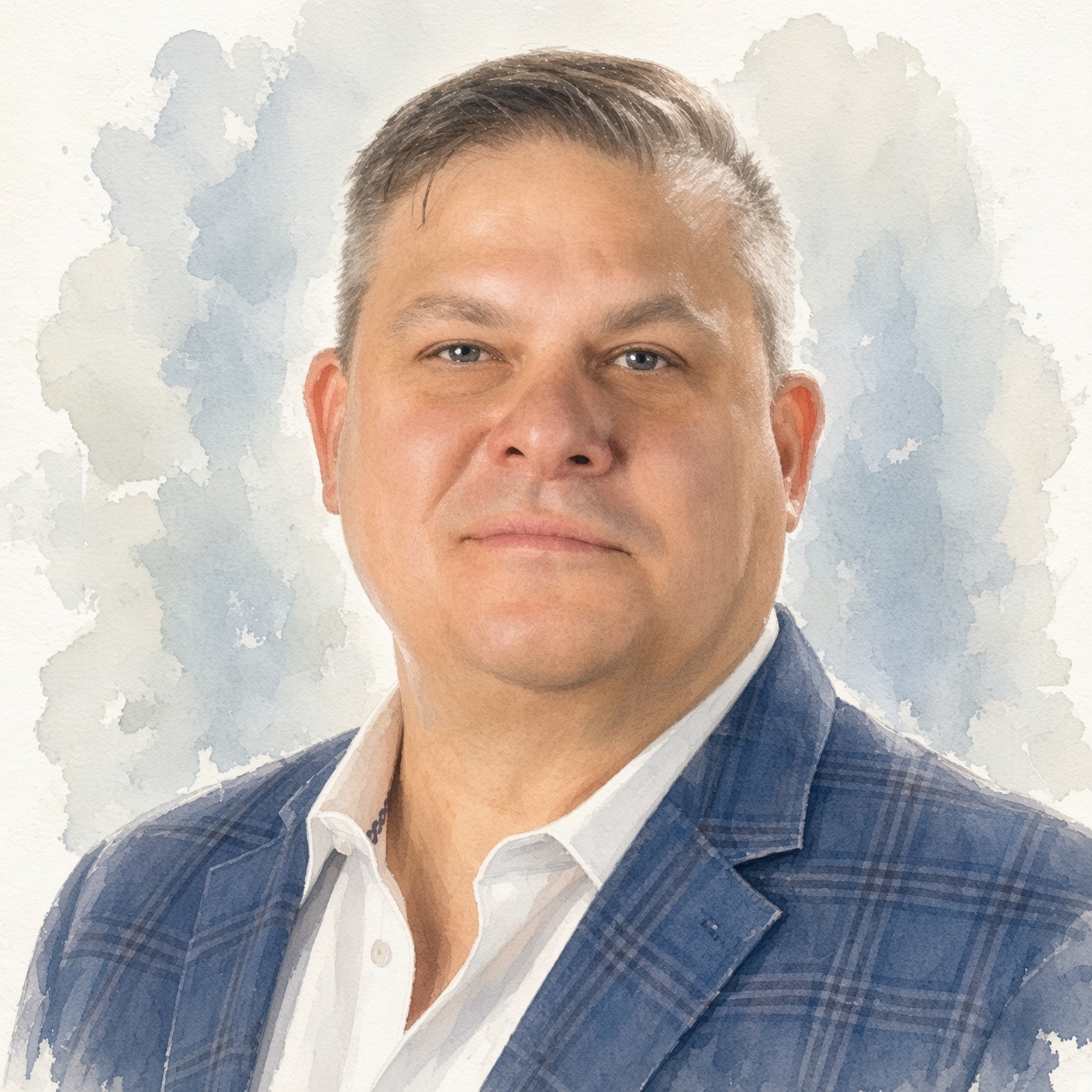
Gib Olander
Product Visionary · ex-Vendasta EVP…
- Strategy
- Company
- GoProductMgt
Related episodes
 65:23Mental Toughness · Ep 10From Managed to Modern: Evolving the MSP Channel with Juan FernandezJuan Fernandez · Co-Founder & CEO · MSP-aaSMore from the show
 44:10Accountability · Ep 9Mentorship and the Generational Gap with Quang DoQuang Do · Partner · RevEng ConsultingMore from the show
 44:59Mental Toughness · Ep 8Betting on Yourself: Resilience and Reinvention with Heather MonahanHeather Monahan · Founder · Boss In HeelsMore from the show
 32:28Strategy · Ep 7Evolving Inside a Software Giant with Carson HeadyCarson Heady · Author & Sales Leader · MicrosoftSame pillar: Strategy