
Evolving Inside a Software Giant with Carson Heady
Carson HeadyJuly 15, 2026
Microsoft sales leader and author Carson Heady on Moneyball prospecting, serving over selling, gratitude, and relentless reinvention. with George Leith.

Transcript
George Leith: Conversations with the operators, founders, and leaders doing the slow, hard, beautiful work of becoming who you always knew you could be. I'm George Leith. Let's get to work A number of years back, and I was trying to figure it out how many years back, I met this fine gentleman, Carson Heady, uh, from Microsoft, and, uh, numerous author now, Carson. Man, we were trying to figure it out before we turned on the record button, but it's probably six or seven years ago. Yeah. Um, and really happy to have you back on the show because I remember that episode of Conquer Local. I learnt a lot in that episode and I, I can't wait to learn from you again today.
Carson Heady: It's awesome to see you, George. Thank you. Yeah, lot's changed for both of us in the last several years. Congrats for all your success, and great to be with you today.
George Leith: Now, you had Salesman on Fire when we did the original interview, and now you've written a number of books. So can we talk about the, the litany of books that you've written as a, as a published author?
Carson Heady: We can do that. Um, you know, it's funny. Every time I write one I'm like, "Ah, I'm done." You know? It's such a labor of love. Um, but there's always more to tell. That's the beauty of life and sales and leadership, um, is there's always more, uh, to tell. And, um, so since that time, um, I actually released The Show Must Go On, which was, uh, really post-pandemic, you know, living, selling in the pandemic, leading in the pandemic. Um, and a lot of the changes, um, you know, how challenging it is and was as a leader to, you know, transition from being in the office every day to being at this desk every day. Um, you know, the, uh, the inspiration was the song by Queen, of course. Um, and then, uh, Unbeatable, uh, where I brought kinda my, my old character, Vincent Scott, dusted him off from, you know, 16 years ago, and brought him into the present day and told his, his full career story, the ups and downs and rises and falls of a fictional protagonist in sales. And then this year, uh, it was, um, Moneyball Sales. And, you know, as I've been very fortunate over the last 15 years, I've built a demand generation engine that's generated over a billion dollars in revenue that I've presented to my CEO and trained folks globally on in 11 countries. Um, I finally just put my full playbook out there for the world to see how I'm leveraging LinkedIn and AI, uh, to really get any meeting I want and crack into any organization I want from a prospecting perspective. So the whole playbook's out there, and, uh, I love to keep giving because sales has given me so much.
George Leith: You know, a couple of episodes back, we had a good friend of mine on the podcast, Jim Thompson, and at one point in time, Jim Thompson was the head of data for, uh, Gary Vaynerchuk. And, uh, you know, Gary Vee is very famous in, in that, uh, rant that he did one day, uh, give, give, give value and then ask for the business. Um, you, the, you embody that. Um, and to drop that entire playbook online, um, w- was there any consternation because it, that's a Microsoft thing? Or, like, how did you navigate those waters? I know when I talk to a lot of, um, executives, they're always concerned about, "Am I giving away a company secret?" How did, how did you bridge that?
Carson Heady: Yeah.
George Leith: Or was that even a consideration?
Carson Heady: You know, it really wasn't, George, because it's, it's stuff that I started doing when I was at a small consultant firm 15 years ago. Okay. And, uh, the methodology is sound because it's how to leverage LinkedIn and, you know, but also how to perfect your messaging, but also edit that AI-aided messaging in order to book meetings and give yourself a better probability to win. You know, I lifted the title obviously from Michael Lewis' book and the subsequent movie, "Moneyball," about the Oakland A's in 2002, 2003, when they had to reinvent with a quarter of the budget that the Yankees had, and then they ended up winning, uh more games than anybody else, and they had their 21 plus winning, game winning streak. Um, so it's adopted from that. It's how to make be- better data-driven decisions in selling and prospecting and every step of the sales cycle to give yourself the best probability of winning. So, uh, yes, part of that has been my time in this wonderful company, but also it's what I did before, um, working at Microsoft. So, uh, the sales methodologies are sound and they translate anywhere and everywhere. So I didn't have consternation because of that reason and, uh, the company's always been very supportive of the engine that I've created and built. Um, it's very unlike anything else and, um, I've always tried to take that, uh, you know, what is the feedback? What are the signals that I'm getting from these organizations? Why wouldn't they take a meeting? What are the objections that I get? And then how do I infuse that into my outreach? Because I can control the quality of message, the quantity of outreach, and then my consistency of execution and outreach over time. So it's really all about controlling the controllables and giving yourself the best probability to win.

George Leith: The, uh, theme of this new podcast that, that I've brought to life over the last few months, and thank you again for giving us your valuable time, um, is all about evolution. And, uh, I, uh, have been through a massive evolution in my life. Um, and I wanted to share some of those learnings, and most of those learnings came from talking to folks like you and understanding how you had to evolve. Um, and you know, I'm pretty sure I'm older than you. Um, and one of the things that, that always drove me to evolution was I didn't want to be irrelevant. Um, and a- as you get older, that's something that I think all of us kind of worry about, whether we admit it or not. Um, what are you doing to continue to evolve in, in your role? Because, you know, we met six, seven years ago, um, and now here we're meeting again. Our careers have all progressed, and I'd love to understand what might be some of those little, uh, lessons that you could share with the audience that, that could help them in their evolution. Because whether people like it or not, you're gonna have to evolve.
Carson Heady: It's true. Constantly sharpening the ax and, and looking for ways to grow and make myself better. Um, I mean, from decisions to give up alcohol two years ago to, uh, reading constantly, voraciously, you know. Uh, replacing doom scrolling with reading Kindle books and Audible books and, you know, great Lessons from mentors. I think you and I share this where, you know, it took a while for us to get into kind of the mentorship game, you know, mentoring and being mentored. And, um, I've benefited so greatly just from even some of the book recommendations, like recently reading "Designing Your Life" by Dave Evans and Bill Burnett or "Halftime" by Bob Buford. And to be able to look at, you have to start where you are. Um, the set of circumstances that you had six months or a year ago may be completely eradicated. Uh, businesses are constantly evolving, and so we can't get married to the past. Uh, we have to look at our current set of circumstances, pick a North Star, make sure we're, you know, working toward who we want to be, who we're endeavoring to be. And I, I study. I study, um, could be great practitioners and legends in my craft or even in other crafts. You know, reading, um, autobiographies of great athletes or, uh, revered musicians and, and just understanding. You know, I recently read "Tribe of Mentors" by Tim Ferriss. And you know, picking up on some of these disciplines and behaviors, because again, it goes back to controlling what you can control. Evolution is mandatory. Reinvention is mandatory. Um, you know, I had a great mentor, uh, who I followed her around for six years across four roles and, you know, she would always tell me, you know, "What got you here will not get you to the next level." And so it's all about what are you able and willing to do to be at your best? And, you know, it's incredible, George, because I'm sure you probably feel the same way knowing you like I do. I feel like I'm the best I've ever been, and I want to continue to get better. And I mean that in my faith, I mean that with my wife, I mean that with my kids, and with what I bring to the, the people that I seek to serve. Customers, my colleagues, my team, the people who work for me, the people I work for. I constantly want to serve them better because I've found I've never focused on a number a day in my life. I have focused on obsessively serving everybody that I can and lifting them up with my unique skills and superpowers, and I've found that if I lift everybody up that I touch, guess what? The results are always there, and I've been wildly successful because of that. I'm very grateful, but I'm also very humbled by those experiences. I've been laid off three times. Um, you know, I've applied to 3,068 jobs that I didn't get. Uh, what can I learn from that? How do I show up better the next time? Constantly evolving, constantly pivoting, but constantly looking at how do I best serve the next person? What's the next right step in front of me?
George Leith: So when you, you said something really interesting because that best version of yourself and, and I, I heard from you, you feel this is the best version of who you've always been. Um, and you know, not the first time we've heard somebody say that on a podcast or in a book or something like that, but what-- and I would tell you, this is the best version of this individual as well, by a long shot. But it's not easy To get to where you are. And I, and I find sometimes when people read a book or watch podcast or whatever it might be, they're like, "Oh, I'm just gonna do that." And what I've learned over the years with lots of failure, um, is that it was a 15-year journey to get to where I am today. And if I wouldn't have made some of those changes, I probably would not be talking to you right now. That's, that's where we're at. Um, but it was a battle. Um, tell us about some of those battles, because I, I'm sure there have been a couple of them. You mentioned two of them, which is the job changes, but I'm, I'm looking more for the day-to-day, because it's really in those daily habits that you, you get to that best version of yourself. W- explain some of those that you've had.

Carson Heady: Yeah, George, great question. Um, you know, a couple years ago, I was on a podcast with Anthony Iannarino, who's a well-known sales author and leader, and, you know, he, he really instilled in me the value of doing gratitude journaling. Um, and just, you know, logging in a given day, what are the great things that happened today that I'm grateful for, and why did they happen? Uh, and a couple things that I found is, one, um, that the things that I was grateful for, why they happened were seeds that I had planted years prior, not knowing where they'd go. And second, the days that I would've deemed my worst days, I actually had the most things happen on those days that I was grateful for. And so amidst the chaos and the noise and the pressure and the setbacks, like, there's always greatness. And, and look, don't get me wrong, there are days where I do not wanna get out of bed. There are days where... And that's what "The Show Must Go On," my book, was all about. I mean, it was in essence my autobiography, and it was about the layoffs and the, you know, the angst and pain and, you know, I was a guy who got up every morning and ran three to five miles and lifted weights and, you know, you get to my age and parts of your body don't work the same way as they used to. And, you know, you've got aches and pains and, you know, nerve damage and, you know, tendonitis and all of these things, and it's, you lose some of the ability and motivation to do some of the stuff exactly the way you did five to 10 years ago. But the show must go on. You still get up and you throw yourself into the fray. And there are absolutely days where you get knocked down. You get bad news. You get passed over for a promotion. You get, um, you go through gnarly negotiations with executives that are demeaning and, you know, ruthless, and you're cramming Chris Voss podcasts to hope that you show up better in that conversation, and then you get the beat down. Or, you know, I do a lot of prospecting, and I've prospected where I've talked to board members and C-levels, but then I've had procurement get just all fired up trying to call me out and, you know, beat me down. And, and so it isn't glamour. Um, there's a reason that Rocky Balboa is up here on my wall. Yeah, the world ain't all sunshine and rainbows. Um, you know, it ain't about how hard you hit, it's about how hard you get hit and keep moving forward, and I firmly believe that to be true. Um, all of us face setbacks, personal tragedies, people in our lives that, you know, pass away unexpectedly or have debilitating, crippling diseases. Um, you know, you can only be All you can do is control the next step in front of you. And I'll close with this. It, it reminds me of this backpacking and hiking trip that I took with my father-in-law and brother-in-law years ago, uh, through Rainier and the Cascades. And, you know, we're, we're climbing these mountains and doing stuff that was completely out of my comfort zone. Um, but-- And I looked up and I would be like, "My gosh, I have to go up there?" But I realized if I could just land the step in front of me over and over and over again, I would eventually get to a place that was a summit that I could look down and be like, "Wow, look at where I traversed on this journey." That's what life is. It's land the step in front of you. Sometimes it's hard, sometimes it's really hard, but all you can do is land the step and control how you show up in the moment. And if you do that over and over again, you'll get where you're going
George Leith: That, uh, that's a clip right there. That was great. Um, the other thing that I, that I got out of that that was really, I think really important for our audience to understand is the gratitude component. Because the, the hard stuff that we do has a tendency to stick more than the moments where you were like, "Should just be grateful for..." I remember my wife and I went on a trip once, and I'd always wanted to go to Hong Kong because I'm a huge James Bond fan, and my goal before I die is to go everywhere that James Bond's been. Um, so I'm in Hong Kong, and we're at this beautiful restaurant, and she's got this smile on her face that, uh, I would just love to see every day. And I, I'm now starting to bring back those moments of gratitude because it was the battles that paid for that. It was the battles that, that hardened us, and I don't mean in a negative way, I mean in a very positive way so that we were ready to deal with those. Like every, uh, you talked about negotiation. I'm in one right now on a deal, and it's a battle. Um, and I respect why they're battling because I also spent two years as a vendor or a- as a person dealing with vendors and, and suppliers. Um, so that gave me a whole different lens. But, but I'm over here going, you know, listen back to the call, read the transcript, learn from it, um, and, and appreciate this. Because if you're going to celebrate the good stuff, you've also gotta kinda celebrate the what you thought at the time was bad stuff, but holy shit, did you learn a lot from it.
Carson Heady: Amen to that. Also a huge Bond fan, hence why I drive an Aston Martin. But I make an analogy a lot, George, about, uh, the movie Skyfall. And the reason that it-- even though Sean Connery has always been my favorite, I look at Skyfall as the perfect reinvention of the character because you've got a guy who, in essence, it was their 50th year anniversary, and, you know, he's meeting a lot of the, the staff that we've known to love for years, like Q and Moneypenny. But when he sits down with Q and he's talking about that, um, old ship being hauled off, um, and being retired, and Q is, you know, talking about how much he can achieve, uh, in his pajamas with his cup of Earl Grey with his laptop, and Bond's like: "What do you need me for?" And he says, "Well, sometimes the trigger has to be pulled." And Bond says, "Or not pulled." And it's the, it's the power of knowing the difference. You know, that judgment, that wisdom, those scars, those stripes that we earn through years and years of going through this journey, that's valuable. And no matter what AI and technology is going to be able to do, um It's not gonna replace that alligator skin that we've developed. It's not gonna replace that ability to sit down and have a meaningful conversation with someone and lift them up when their entire world is crashing down. Um, you know, there are layoffs. I'm in tech sales, right? I mean, there's layoffs and there's change regularly, and to be able to have a, have an actual legitimate human connection, meet people where they are, understand where they are, but also to be able to speak from a place of strength and help them see around corners better. I've had absolute situations where I won the biggest award in the company, and then the next week my role did not exist anymore, and I was thrown into a different job. Again, we've talked about this before, you can't get married to your set of circumstances. Nothing good or bad lasts. And so if something is awful in your life, you gotta stick with it. You gotta stay in it and withstand, because there is an end to that, that you will come out on the other end changed and forged to steel. Just like when things are great, you know, don't get too used to it, um, because something may change. You gotta insulate yourself so that, you know, when stuff changes, like you're not caught flat-footed. So, um, I think there's so much that can be learned, um, throughout our constant evolution.
George Leith: When, uh, when we look back to the, the author component of this, what was the, what was the catalyst that got you into writing books? Like, one of my favorite business authors is Patrick Lencioni, and in Five Dysfunctions of a Team, he writes a fable that is based on experiences that he's had, and you've, you've adopted that same type of thing. But I'd like to understand the moment that you decided that you're, you were gonna do it. What was that catalyst?
Carson Heady: I always liked writing. Um, you know, even just as a kid, like I'd write stories with my friends and I, like solving mysteries or going to outer space, right? Or time traveling. And then when I got older and I was working at AT&T, I ran a division, um, and I was writing in their newsletter, and I realized I love writing about sales and leadership. And sales has been so good to me, George. You know, I met my wife in sales. I've, you know, have made so many amazing relationships and had so many wonderful experiences. I've got this, uh, you know, picture board back here on my wall, and it's all my favorite pictures of all time. And a lot of them are trips that I was able to go on because of sales. As you said, you know, going to New York City, going to Amsterdam, going to Philadelphia, standing on the Rocky Steps, holding my hands up in triumph. Uh, these are all experiences that I've had because of sales. So I wanted to kinda give my love letters to sales, and I created a fictional protagonist 16 years ago now, uh, almost 17, named Vincent Scott. He goes through these trials and tribulations, and that was kind of the fable part. But it was a book inside a book. There's so many great sales books that are out there. I didn't wanna compete with that medium, so I kind of wanted to put my own unique spin. So I wrote a sales book about a person, and then the intervening chapters were the stories, the, the chapters that he writes about sales and leadership. Um, and every book that I've done has been very similar. My most popular has been Salesman on Fire, which is completely about reinvention. Um, it's about, uh, someone going through, uh, an excruciating time in career and having to reinvent and invol- and, and evolve. Um, and then the subsequent books have been more, as I reach this stage in my life and career, looking back, what have been the best lessons that I've learned? And then the full playbook. Uh, my, my motivation has always been... And, and all my book royalties, they go to charity. They go to the Michael J. Fox Foundation for Parkinson's Research, um, 'cause it isn't about the money. It's about how can I leave my legacy within sales, because it's been so good to me. That's my motivation
George Leith: It's, um, it's very inspiring to listen to the passion that you have when you speak about your career as an author. Um, and it's so interesting to me that that's your side hustle, and I notice in the picture behind you, you got a bunch of kids, um, that I, I'm sure are, are, are consuming. I, I say to a lot of folks when they're like, "Well, how have you traveled so much, and how have you done those things?" And I'm like, "I have a very understanding wife, um, and my, my kids are adults with kids of their own." If, if I had a younger family, I wouldn't have been able to grind it out in the planes and hotels and, which by the way, I think you know this, is not as glamorous as it, it seems to be. No. But, um, what about the balance between, you know, top performer at Microsoft, published global author, a name that thousands upon tens of thousands of people recognize, and being dad?
Carson Heady: Yeah. It's a great question. I was on a show a few years ago, and I think it was well-defined as a work-life rhythm. Um, it's not a balance. It's never completely in balance 'cause balance is like sum zero. You stand on the scale and sum zero. So there's always gonna be things that are in and out of flux. But I've got a great wife who I've known for over 20 years, and, uh, she knows me, she knows what I need to do in order to, um, you know, have the impact that I'm looking to have. Uh, but at the same time, like, you know, I've been very fortunate too because nothing has ever been completely out of whack. Like I've, I've worked myself to get into the position where I can make a lot of the choices, where maybe I'm only traveling once a month. Um, maybe I'm, you know, doing some of these things and, you know, taking, uh, a, a family member along, right? So like it's, um... It has never been completely out of whack. I am very present, and I've got a very close friend of mine who alwa- he always says, "Be where your feet are." So at 5:00, 6:00 today, I'm gonna walk out that door and I'm completely husband and dad, and I'm not consumed by any of the other stuff. The, the comments on social media, the, you know, the messages, the, you know, the, the work, um, it, it has to pause. Like you have to separate yourself from that, and you gotta make investments where it matters. I'm constantly making investments in my marriage, uh, in, you know, with my kids and, uh, trying to be very present with them at all times. In fact, we're going on vacation soon. So, um, that's a long way of saying that things are never going to be perfectly in balance, but there's a rhythm and there's puts and takes and, you know, being clear, um, but also making sure you're making the right investments with the right people and the right relationships at the right time is mission critical.
George Leith: We talked about a lot of stuff in the, uh, interview, and we talked a, a lot about success, and not once did you talk about earning. Um, and but you did mention earlier that it's not, it, it's about the inputs and not about the lag. Um- But one of the things that I've always said about sales, and maybe it's an ego thing, and you- maybe you're teaching me something again, Carson, right here on the call. Uh, my whole thing was I didn't go to university, um, and, uh, but sales has treated me really well as well when I look at the commissions over the years and, and I know what my earning has been, and I know what other roles might have been. Um, but maybe I'm too focused on that end game of what's in the bank account. I, it- I care about money... it's inspiring the way you bring that up.
Carson Heady: I care about money, you know, but I will say, like, it goes back to what w- what I was saying before around never worrying about a number a day in my life. You know, when I first got a taste of the money that I could make in sales 20 years ago in the call center, um, I became obsessed with the metrics and the performance. Um, when I had a kid, then it became all about family, but it was all about h- now how do I continue to give experiences to my kids, to my wife? How do I f- you know, make all their dreams come true? And so those things absolutely drive me. But I will say as well, like, there's a fulfillment component. You know, I've won every award I can win at Microsoft and in tech sales. I've been heralded as the number one social seller in all of tech globally, and I've had a lot of amazing experiences showing my demand generation Moneyball sales engine to the CEO of my company plus, you know, our commercial senior leadership team, right? Um- If you're good at something, rich can be arranged. Rich can come fairly easily. That's from "The Color of Money," my favorite sales movie of all time. Um, I've been very well rewarded. And, you know, ironically or not, um, I was recruited a few years ago after my longtime mentor retired, uh, to move into the nonprofit sector at Microsoft and lead a sales team, build a culture around sales. It's been the most lucrative experience of my career financially. Um, I think the money will come to you if you have the right intersection of purpose and performance and dedication, but you've gotta have that passion, you've gotta have that fuel. I get to do what I love doing while serving the greater good, bringing resources in that are helping these, you know, the, the largest, most significant nonprofits in North America. I get the pr-privilege of supporting them on a daily basis, very passionate about what I do. That helps me get up in the morning when I don't necessarily feel like it, when I can barely walk 'cause my back hurts or, um, when I just got crushing news somewhere in my life. Um, you know, so you want to continue to earn your stripes so that you can put yourself into a position where you can make the money, but also feel fulfilled in your day-to-day.
George Leith: I really appreciate you sharing with the audience that there are days where you're like, "How the hell am I even gonna do this?" Um, and, and I think it's important to share those because, um, when we were, we were building Vendasta, and, and that was a ground-up build. It was such an amazing experience. We, we couldn't hire tech salespeople in Saskatoon, Saskatchewan because there weren't tech salespeople in Saskatoon, Saskatchewan. The CEO wanted us to be in the building and, um, so we were hiring bartenders and cell phone salespeople and former teachers and, um, and then we had to teach them about sales. And, and I will tell you, when I meet one of those young individuals where they were a bartender, nothing against that role, by the way. I actually think that those people make great salespeople. Um, they have- They're great listeners. They're great listeners. They're great talkers. They deal with horrible situations. Um, uh, anyways, and they tell me about the life that they've been able to build from some of those foundational skills that you and I probably just take for granted, uh, because we've been doing it so long. That actually feels better than the biggest paycheck. Um, and that's hard to say because, uh, like you, I like money and I like the things that money can provide, but knowing that you made a difference in people's lives, um, I'm sure you get a lot of this, uh, because you publish those books and you, you've taught those people through that. What, what does that feel like to know the impact that you've made globally?
Carson Heady: There is a, since you're a James Bond nut like me, uh, there's actually a continuation novel called By Royal Command about young Bond, and he's actually talking to a professor. And in that book, the professor is talking about the value of like when you win and when you climb the mountain, that moment is a moment in time, and then it's over, and then everything from the summit on is downward. Um, y- we've done amazing stuff in our career, right, George? I mean, that, that we're very happy with and very proud of a- and rightfully so. But, you know, the, the chances of me going back and, you know, winning some of the same awards that I won five, 10 years ago is 0%, right? Um, I've gotta find ways to continue to give and invest and, and, um, you know, be, be relevant. I'm, I'm looking at the same things, and the best way to do that is giving and, um, imparting your knowledge and your wisdom. And, uh, that is actually why I was a sales leader for a long time Managing managers, managing teams. I built 19 number one teams in my career, and, uh, I actually for several years, when I came to Microsoft, I was an individual contributor again. And I, I had d- trepidation, like, do I wanna go back into people leadership? And ultimately I did because I, it was the right mix, it was working for the right person, leading the right initiatives in healthcare and then in nonprofit. Um, it was the right mix at the right time, and I, I knew that I, what I could do. I knew what I could leave these folks with, helping them, um, you know, make Microsoft smaller for their customers, helping them better connect with executives and add more value, helping them find more fulfillment in their own lives and career. You know, getting to work with some of these folks in their 20s and 30s that are, you know, just starting out, um, you can have a moment of extreme fulfillment every single day. Um, that's what it's like for me. And then to have, you know, hundreds of thousands of followers around sales and sales leadership globally, and to message with some of these folks and to, you know, like genuinely be able to help and impact somebody, um, around the world that might be struggling in their sales career, I can't even tell you, like, how amazing that feels. So, um, I, I'm very blessed in that regard. Um, I have to pinch myself sometimes because it's unbelievable. But it, it takes time. Like you said, it is a 15-year journey. It's, it's like this little snowball that compounds and becomes like this avalanche of fulfillment. Um, that's what I encourage people to keep moving forward toward, um, because anybody can do this. I'm from a small town in the Midwest. I'm a nobody, and I've been able to create this over the last 15 years of just constantly investing in other people and in my own growth.
George Leith: No, it's such an a- it's such an amazing story. And to your point, everything good didn't come out of New York and the Valley and, you know, wherever else it might have been. It actually came out of places like where you and I are from. Uh, there's a saying we have in our province, which I'm, I'm shocked how many people can actually pronounce Saskatchewan, but, um, that our best export is our people.
Carson Heady: Ooh.
George Leith: Um, and I, I think that that's, you know, small town is where the rock stars come from a lot of times, um, even though they may be living in a large center. So I guess the, the reason to bring that up is don't let where you are dictate what you're going to build because it's, you know, Colonel Sanders built a hell of a business from a little town in Kentucky selling chicken. Um you know, we, there are all sorts of stories like that, and, and those stories usually come from the books that you read, the podcasts that you consume, the mentors that you share time with. What do you, what do you like better, working with a great mentor or being a mentor?
Carson Heady: That's a tough one. Um, I'm gonna cheat and I'm gonna say the experience when the person is both. Um, I actually met with someone this week who we're kinda mentoring each other, and you know, it's interesting, they are senior to me, giving me ideas and pointers, but I'm also listening to their experiences and where they're stuck managing people in similar roles to mine and giving them ideas. I love that, that sharing of ideas. You know what's amazing, George? Like you just mentioned it, it's the books, the podcasts. Like, getting book recommendations from people, giving and giving book recommendations, that is so incredible. I am constantly looking for like what's the next read? What's the next documentary? How can I like, you know... A- and I, sometimes I look back, I just wrote an article this week about like my first half of the year, and I was looking back on some of the books I've read and it's, it's amazing. Like, I feel like I'm in a completely different place than I was in February when I was, you know, reading about Mozart, right? And like his obsession with perfection and, you know, like now flash forward, like I'm reading all of this stuff about like designing your life and I'm reading, um, the book Peak, um, and a couple other things about just like, you know, reinvention and evolution. Very, you know, apropos that we're having this conversation today. So I like the experiences where it's both, um, but while there is merit to always learning and always giving.
George Leith: Well, Carsten, I really appreciate you fitting this interview in before you go on your family vacation. We're actually recording this interview just before July 4th, um, and uh, really appreciate... I, I always learn so much when we get a chance to have a conversation, and thank you for accepting the email invitation and, uh, jumping on this crazy new concept we have of this new podcast. I, I appreciate it more than you know, and enjoy the time with your family, and congratulations on all your success.
Carson Heady: Back at you, George. Always good being with you. Thanks for having me.
George Leith: Carsten Heyde on the show, the Evolve Pros podcast. Please like or subscribe. Uh, we really appreciate everybody's input over the last two months of, since we've launched the show. And, uh, as always, my name is George Leith. I'll see you when I see you. That's the conversation for this week. If it moves something, share it with someone who needs it. I'm George Leith. I'll see you when I see you.
About the guest
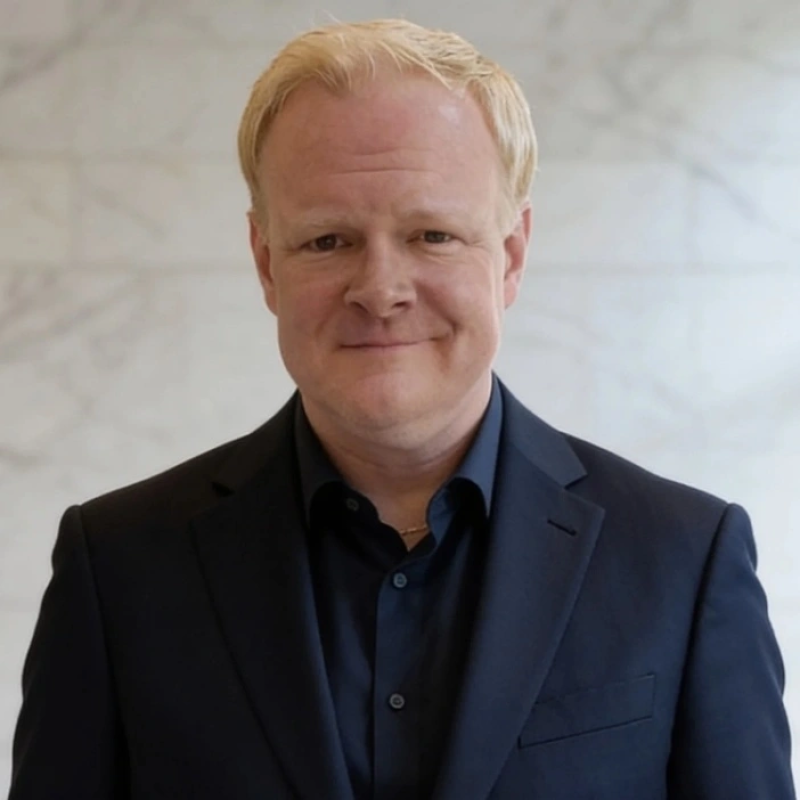
Carson Heady
Author & Sales Leader · Microsoft
- Strategy
- Company
- Microsoft
Related episodes
 65:23Mental Toughness · Ep 10From Managed to Modern: Evolving the MSP Channel with Juan FernandezJuan Fernandez · Co-Founder & CEO · MSP-aaSMore from the show
 44:10Accountability · Ep 9Mentorship and the Generational Gap with Quang DoQuang Do · Partner · RevEng ConsultingMore from the show
 44:59Mental Toughness · Ep 8Betting on Yourself: Resilience and Reinvention with Heather MonahanHeather Monahan · Founder · Boss In HeelsMore from the show
 30:54Strategy · Ep 6Leading a Digital Evolution at Salem MediaJamie Cohen · Chief Digital Officer · Salem MediaSame pillar: Strategy