
Leading a Digital Evolution at Salem Media
Jamie CohenJune 18, 2026
Salem Media CDO Jamie Cohen on leading digital transformation: anchoring change in purpose, failing fast, and why the pace only accelerates. with George Leith.
Transcript
George Leith: Conversations with the operators, founders, and leaders doing the slow, hard, beautiful work of becoming who you always knew you could be. I'm George Leith. Let's get to work Jamie Cohen, my guest on the Evolve Pros podcast. Jamie, thanks for, uh, dialing in. You're... Well, you're in St. Louis, obviously.
Jamie Cohen: I am in St. Louis, and George, I am always happy to make time to chat with, uh, chat with you.
George Leith: Well, it's great to have you on the new show. Um, Jamie was a guest of mine a couple of times on the Conquer Local podcast and, you know, we've, we've, uh, known each other for a number of years, and you're involved in an, an evolution right now, um, in an organization that is evolving. But, uh, you, you have, uh... Your last few roles have been, um, involved in evolutions of organizations that were going through change, so that's why I'm excited to have you on the show. You've got a very unique perspective on evolution and, and moving organizations and, um, we have, uh, we've had late evenings discussing and role-playing about, you know, what maybe we'd do differently in, in, uh, orchestrating some of these evolutions. But talking about the current evolution that you're involved in, um, you've been at Salem Media now for a number of years and, and it's really been remarkable, uh, the way that that organization has been changing. Um, let's rewind to day one when you walked in the door at Salem to where you are today. Um, it... What, what does that look like? If you could just give us a bit of a high level if you, if you were to look back over those years.
Jamie Cohen: Uh, it's been a fun roller coaster ride to be on, because if I just say a roller coaster ride, then that doesn't imply that I'm having fun. Uh, you know, evolution is a constant state, uh, because you're never truly where... I don't, I don't know that you're ever truly where you need to be, or I'm never comfortable where I am, always striving for, you know, more or, or something different. Uh, Salem has given me every piece of that and, and continues to. Uh, eight years into, you know, our digital transformation and digital evolution and, uh, you know, finding more to do every day, I would not have... Th- th- you know, there are definitely things that if I went back and listened to our pod from, I think, a Burrell show long ago, uh, to today, probably not everything I said, uh, back then has come to fruition, uh, or may be even relevant today. Uh, but the process of transformation, uh, continues. Uh, and it's, you know, it's about, uh, you know, path, process, uh, and, you know, at the end, hopefully profitability
George Leith: I remember when you were, you were in the running for that role and, um, you know, we had met when you were in a previous organization, and then I got the phone call the one day. You were like, "Okay, this is what I'm doing now, and, uh, we need to have a conversation." Um, and then, and then we did that first interview when you were on the show, and we were in California, and you'd, uh, graciously invited me to come speak in front of your leadership group and, um, and, and I remember that interview quite clearly because I listened back to it. But, um, I also remember how the look that was on your face, um, and it was a look of, uh, maybe fear, uh, coupled with, uh, excitement and enthusiasm. Um, and, and so if we could go back to that moment and, and that uh, when you were just starting in the role and you'd kind of got enough under the hood to go, "Holy shit, this is what I'm, I'm into," um, w- what, what, what does that, what did that feel like in those early days as you were, you were digging in? Because you, you were pretty clear that you knew where it needed to go, but, um, you know, we all know that, uh, that, uh, the best laid plans, right, uh, doesn't quite work out the way that we had it in our heads. Th-
Jamie Cohen: there's always what the journey, people believe the journey looks like and the actual path of the journey. Uh, anybody who spends time on LinkedIn or socials is gonna see there's all sorts of, you know, images and memes that, you know, that, that take that same, you know, uh, whether it's the, uh, iceberg and, you know, the real, where the real work happens and nobody sees it and, you know, that, that's the reality. Um, the, the passion and energy i- is there. Uh, the fear still remains in, you know, because of what w- what I'm doing, I feel, is so important. Uh, it's, you know, there, there's a self, there's a sense of importance to the work that Salem does, uh, that makes it something different than the work that I did when I worked at other places. Uh, there's a, a different expectation of what the outcomes do, you know, uh, and the things that we do for, you know, media, for, uh, you know, uh, you know... Th- there's a higher, you know, there's a higher meaning to the work that, that we're doing. So, uh, it, you know, it keeps you going, it keeps you motivated, it keeps you passionate. Um, but- There's always the fear of what you don't know, uh, and, you know, um, I think that that always-- that's always a part of, of, of everything, but it's how you conquer that fear. Uh, you know, how you overcome what is your weakness to make it a strength. Uh, you run from it or you run to it. Every day I run to it realizing it's not gonna be easy, it's not gonna be f- fun every day. Not everybody's gonna like you. Um, most people may not like you. Um, but you have to kind of keep moving forward understanding what your role is and what you're here to do. I try to not lose sight of that, you know, and that's what keeps me, eight years in, passionate about what we're doing, uh, and excited for all the things that we're doing today as a company and continuing that evolution journey that started, uh, George, as you corrected me, uh, in California at our managers meeting, uh, where you graciously accepted the, uh, offer to speak to our leadership group.
George Leith: You ever want me to go back to Fairmount in West Hills at any time, it was a beautiful facility. Um, so let's just go back just a moment ago because you still-- I will tell you, you still have that energy. We got to have dinner together in Vegas at the NAB here recently, and, um, you still have that energy and you're ready to conquer the next challenge. But I, I-- what I'm hoping to get from leaders like you on this show is it, it's not always a bed of roses. There has to be questioning, are we doing the right thing? Is this the right approach? Did what I, you know, what the play I ran six months ago, is it still the play that I should be running today? Like, that, that anxiety is a real thing that you're constantly dealing with
Jamie Cohen: Uh, moving anybody's cheese is not fun. Uh, and when you're, you know... But that's part of what, you know, again, I, I didn't come into any role or into my career saying, "This is what I'm wanting to do." It's, you know, it's where life dropped me, you know, dropped me as a, uh, you know, digital person in 2001 telling the same story that I'm still re- regurgitating today, you know? Uh, it's, you know, it's that evolution and journey that, that's happening in media, you know? And, you know, it, it is not all a bed of roses. Uh, you do spend a lot of time questioning what you're doing because anytime there's, anytime there's people that you work with that don't see everything the way you see it, if you're not thinking to yourself, "Am I wrong?" Then you're not a, you know, then it makes it a lot harder. So I think you have to question yourself, uh, because if you don't, you're not likely to, you're likely to miss something, you know? So yeah, uh, it's the people you work with are important, the trust that you have, uh, the, you know, mission, purpose. Why are we doing this? Why would it, you know, why stick on a hard path when you know it's a hard path? George, I've not found the easy path still. I, I don't, it doesn't exist. Um, you know, every path is hard. Everything is hard. This is what I was... You know, I, I truly feel my job and my life is about moving things forward and helping people unlock their greatest potential. Understanding that's my job and what we're doing, you know? Um-

George Leith: So is, is that, to back to what you just mentioned about moving people's cheese, is that your cheese? Is, is the ability to take somebody and show them that there is a better, more efficient way that they can conduct themselves and the benefit is there for them
Jamie Cohen: It, it's funny, uh, my, my boss Dave talks about his, you know, love language is serving people, you know, and that's what makes him happy. That's of all the things he does, that's what makes him, you know, feel the best every day is when that's what he's doing with, with our employees and people that he cares about. For me, you know, that's a good question, George. Uh, but I do think there is something there. For me, it is getting somebody to realize and, you know, see the benefits of the things that we're trying to do and say, "Okay, I see it. I can take it and run from here." You know? Um, you know, that, that's what it's about. "Hey, I've, I've got it. I see it. I get it. Thank you. Let's, you know, let's, let's go forward together.
George Leith: Yeah. I, I, um, had a phone call here recently. I will not bring up the name of the individual to protect their identity. Um, but it was an interesting call because they were like, "You know, when you were making the adjustments that you were making in your role, I don't know if I necessarily agreed with them. Um, but now I understand why, and now I, I see why you were taking the approach that you were taking. Um, I, I don't necessarily still know if it was everything was the right way to do it. In fact, I'm sure there were pieces that weren't correct in it." But to have a little bit of that validation come later on, um, you know, is like, okay, we did impact a few folks. Um, and, and it, it does kind of get people to understand. Because if you don't change, and we've been involved in organizations and businesses that just refuse to change and, and then you have to really go find something else to do because then it, it just ends. And it... And so the one, one thing that you and I have talked a lot about is, um- This generational, uh, workforce that we have where we- we're in this really unique place where we've got four generations in the building, um, in most organizations, and they all want different things, and they all care about different things, and they all can't really be led with the same approach. And, uh, that's, you know, you've been bringing in new individuals that are new to the company, but also, you know, they're podcast experts and they're distribution of podcast data experts, and you're doing it inside a, a traditional radio company where, you know, podcasting and radio for a while there, but, uh, you know, so as you bring these new people in, what, what is that doing to the transformation of the organization as you continue to bring in, and I'm not just saying this younger new talent, you're bringing in veterans as well that have just done things differently, but they're all sitting in those four generations. How's that impacting the, the evolution that Salem Media has been on?
Jamie Cohen: Interesting question. Uh, I, I think it's, you know, I, I think there's opportunity in every, you know, in, in every group, uh, that we work with, right? Like, you know, uh-
George Leith: So it's, it's basically we got the the boomers, you and me, Gen, uh, uh, Gen Z, and millennials. We got the four different workforces.
Jamie Cohen: Yep.
George Leith: And, you know, we were sitting at the table the other day where you've got your henchmen, and then you've got that young woman, Ashley, who's come in. Yeah. And, and they all care about different shit, and they all bring different capabilities and, and expectations to the organization.
Jamie Cohen: That's what it really gets back to, is having a clear mission. If you have clarity on what your purpose is as a company, then it's not a, then it's not a question of, "Hey, I think our purpose is this, so I'm doing this." It's, "Our purpose is this, therefore what we do is designed to support that purpose and the goals and align to that org- organizational purpose." So, you know, as things change, what doesn't change is purpose, you know? Uh, and if purpose, uh, you know, if your purpose, you know, doesn't change, then as people come in and change, they understand what your culture is, you know? Uh, and, you know, I, I think that's one of the things that as a company does go through, you know, this process and period of change, it's, you know, it is hard not to lose your culture. People feel like, wow, all of these things are changing, you know, and all of these thing, and things are different, and that makes people uncomfortable. I get uncomfortable when, when, you know, uh, two girls, two kids, when they, when things are moved around the house, I get uncomfortable, you know? So it's, it's all, it's an understanding of, hey, the reason we're doing these things is because it aligns to what our purpose is. We have shared goals, you know, that align to what our purpose is. You know, so if you can keep that type of structure, it's less about what I think, what John thinks, what Sally thinks, what Tim thinks, what Tina thinks. It's more about this is what our purpose is, our job is to support that purpose, not take us away.
George Leith: When you, um, when you said yes, that you're gonna take this job, um, and you became the chief digital officer at Salem Media, um, what did you think was gonna be the hardest part, and then what actually turned out to be one of the hardest parts? Because a lot of times what we think is gonna be the challenge isn't necessarily what turns out to be one of the biggest challenges.
Jamie Cohen: The biggest thing I thought was gonna be the challenge was the gap of learning a new medium. You know, I grew up as a, uh, you know, a print pers- a digital person in a print world. Mm-hmm. Um, you know, so I never sold print or I never sold radio, but I came in on the digital side of each of those assets. It- it's always been about the- the- the, you know, evolving to the- the digital side.
George Leith: So did- did that, was that validated that that really was the hardest part?
Jamie Cohen: Uh, I would say in retrospect, no. Uh, it's not the hardest part because that's just what I was the most uncomfortable... That was the most, that was the biggest gap that I knew I personally had. My biggest personal gap was gonna be asking irrelevant questions about things that other people, uh, it is their life, it is how they've made their income, and something that, you know, uh, most people in radio have a passion story to radio. You know, uh, so the- the hardest thing has been sharing, finding shared visions of, you know, s- creating shared realities of where we actually are that we can align to And then documenting in alignment where we wanna be. You know, those two things are foundational in change. You know, and if your team isn't lockstep in where we are, then they're not gonna accept your or the framing on where you want to be, because in their mind, they go where they want to be. Again, that's where it brings back to purpose. It's not your purpose as the, as the chief digital officer, it's how do you serve as the chief digital officer to meet the organizational purpose. You know, it's not the other way around.
George Leith: And, you know, at Salem, you guys have the, the other pressure, I would call it, because you've, you've got missions that, that you are, um, tasked with, and you kinda talked about that off the, off the top. I, I've always admired how the organization has been able to stay focused on that, because there's, there's enough challenges in the world without having that one additional nuance that Salem has of fulfilling a mission and a purpose, but they've stayed very true to that. And, and you've, you know, you've had a hell of a couple of years over there with changes and shows and, um, hosts and, like, it's just been, it's been a very, uh, tumultuous time, that's for sure. But all that said, there has been an enormous amount of success as well, and, uh, as one of the industries out there that is facing this change, Salem has made a, a change to not... You know, you sold off some property and got out of debt, and you guys have grown digital to be a digital-first organization, and digital continues to be one of the top growing areas. And, uh, and I admire what you've been able to do there, but I also, having, uh, the, the friendship that you and I have, have, we... I realize that it's not been easy. Um, and I think that that's part of the thing that I wanna bring out on this show. There's so many shows out there that it's all sunshines and rainbow, and then you find out that no, that's not really the way that it works. And I, I think that it's important for people to understand that evolution sometimes comes with you stubbing your toe as well.
Jamie Cohen: If you don't, you're doing it wrong or you're not going fast enough. I mean, that's, that's the nature. It's, you can't have a fear of failing, you have to have a fear of not failing fast You know, uh, if you don't try, that's, that's accepting the outcome. You know, uh, that's not what we're here to do. So, you know, luckily I'm in a group that understands that the, you know, with risk, you know, calculated risk, um, you know, a- and good investments and, and good strategies, you know, you can create good outcomes. Uh, and but at the same time, there's also a, "Hey, we'd rather you be progressive and trying new things that can help us," and that's the reason for a failure as opposed to the failure becoming because of your lack of desire to change what we do. There's no tolerance for that. There's a lot of tolerance for failing fast, learning Iterating, evolving, moving forward.
George Leith: You know what? I, I, I'm pausing just a little bit because I want to phrase this properly, but what media has went through, and I'm talking about, you know, you got the Yellow Page business, whether that was media or not, or listings, whatever, but it w- you know, in the media business. That was probably where Google impacted first. Um, and I, I, I like to call it probably one of the best products that was ever invented because it solved a problem, and you had to pay for it, right? 'Cause if you didn't pay for your Yellow Page ad, they'd shut your phone off, 'cause it was tied to the phone. You know, so think about that. That one's the first one that gets punched when you get Google comes in. Then it really hit newspapers, and you and I lived that. Then it started to hit broadcast. And as you look at that industry and all of it's going through change, you're like, how did parts of this not see it coming because it already happened over here? So now we have all these other industries that are about to be impacted by change. How can they learn from what's happened in the industry that you and I have been closest to? Because there's a, there is a shit ton of learnings in there, that it's like other industries just look over here because it's about to come your way. And I'm not gonna list them because I think people would just draw their own conclusions from the news right now. So let's talk about that a little bit.
Jamie Cohen: Be willing to talk with people who are willing to share where they failed. You know, find people that unders- that, that have that same type of mentality because, you know, again, if I'm sharing what I've failed in, you've shared what you've failed in, that creates an opportunity for us to learn in things we neither one of us want to fail on in the future. So, you know, again, accept failure is part of what you're doing. You know, again, if you're not failing, you're not pushing hard enough or going fast enough.
George Leith: But we have an entire... I, I don't disagree with you, by the way, but we have entire organizations that, that have been built around a hierarchy where you hide the failures because you don't want to look like you made a mistake. You report over here to your superior that everything's sunshine and rainbows. And then I, I think that there's a correlation there to culture and the way that people have been involved in organizations to the way that organizations need to evolve today. I don't know if you agree with that or not, though.
Jamie Cohen: Uh, I would agree. I think it's a... You know, the question is to what degree do you, you know, do you pivot? Uh, I, I think there's a lot that can be, you know, we live in a world where you don't have to ask or question many things. You just have to, you know, tell an AI what you're thinking about and it's gonna help you. You know, so w- things are moving and changing so fast, you have to be of the mindset, uh, and open to change. Uh, you know, if as people we don't understand that we're changing, you know, the amount of change we go through every day just when changing an iPhone or changing this or, you know, sign up for Netflix or dropping Netflix to, uh, go to Hulu because they've got... You know, we're changing stuff all day long, you know, which is part of the reason why at work we don't like change. You know, because we have it so much in what we do in other places that we don't wanna have it here, you know? And without change, uh, you know, without change, without evolution, there is somebody somewhere that is coming to dethrone you because they want the position that you have. You know, if you're the Yellow Pages, there's somebody looking to say, "Gosh, there's gotta be a different way," or, "Gosh, there's gotta be a better way." You know, without those types of questions, you don't, you know, you don't have change or disruption, and without disruption you don't have innovation. You're stalled. You know, if you stop growth, you can't evolve, uh, you can't live, you can't eat, you can't pay bills. It's all about change and how you go about that change, you know. But I say the word change a lot. Change without measurement is a waste of time. You know, you have to measure where you're going. Uh, you know, if, if you didn't have a map telling you that you missed the turn, you're gonna s- keep going in the wrong direction. You know, I, I rely on my maps in my car when I'm traveling to tell me where I'm going. We need to be trusting our systems, and we should be able to trust our systems and data the same way. When my, you know, map says turn right, I don't question why it's ask- why it's telling me to turn right. I turn right, you know, because I trust the data and the science behind the recommendation Somebody's coming to dethrone you. Know your stuff, know your numbers, know your strength, know your weakness, know your flaws. Make them your strength. You know, that's evolution. It's every day. Um, that's what, George, that's what it ta- if you, if that's not what you're prepared for, media today is not the right environment. Uh, many people can say, "Gosh, media isn't fun anymore." And to those people, it may not be, because it's not what they knew fun was. I know plenty of people that are having fun. It's a different type of fun. Uh, y- you know, they're, they're finding enjoyment in different ways, you know. That's the opportunity we have in media, is to continue evolving because that's what we can count on, you
George Leith: know? Um- Well, and, and you know, you, you bring up a really good point, and I'm thinking back to a, you know, veteran, uh, or long in the tooth or grizzled-up old vet, whatever you wanna call it, um, saying to me one day, "Wow, you know, the industry's completely different." And I'm like, "I, I don't really know if it's completely different. It just is being done in a different way." And if we were really honest with ourselves, it's been evolving the whole time. You know, I, I am a, I am a radio guy by trade, and I spent some time in the publishing business, and then worked in a tech company with lots of different media companies, and I, I guarantee you that a studio at a TV station does not look the same today as it did back in the day. Um, and it was constantly evolving. Same with the studio in a radio station, same with the printing facility. So I, I think sometimes it's just easier to say, um, you know, "Well, I'm not having fun," when if you think back, you really weren't having fun back then either. You were dealing with challenges, you were moving forward. Like, let, let's just call a spade a spade. Um, I, what I do think was that there were, there was a lot of money flowing, and it was easier to, to not be as buttoned up in your process. And, and I think that that's where I, I'm getting to, is when it got hard and you had to measure everything, you had a bunch of people that had never had to measure anything before, so they didn't even know how to do it. Um, and, and that's that might be the one thing that took it out in certain places, where you just had entire organizations that couldn't measure
Jamie Cohen: Couldn't, and you also have some that don't want to.
George Leith: Well, I was trying not to say that, but you said it.
Jamie Cohen: There, there's a difference. I mean, can't and won't are two different words for a specific reason. You know, uh, a person either can't and won't or can and will. You know, I, I think those are two different things. You have to understand where, you know, when d- when, when people are struggling to make decisions or, you know, it's, it's where can they make the decision or can't they? And then it's will they or won't they? You know, I, I think that plays into, to what we're talking about here. If, you know, if you, you know, we can do that today, you know? Um, it, it'd be like wanting to op- wanting to have a surgery done in a 30-year-old surgery center But that's not me. You know, I wanna go to the brightest doctor in the best facility with the newest resourcing to get done the most efficient way so I can rehab my knee, shoulder as fast as I can to get back out to injure it again. You know? That's what we're expecting from medicine. We don't want to have a surgery and then be out for six months 'cause of, you know, it's-- We love change when it benefits us. You know, we've gotta learn to get comfortable with it so it's not dragging us down. You know, because it's a constant, it's not gonna change. Uh, and if you have the option of controlling what you can control or can't control, you can't control whether change is gonna happen. You can control how you roll with it. You know, and the people that choose to roll with it are able to stay in that flow longer, you know? Uh, and, and that's the, you know, that's the journey. Uh, we're all on this continuous journey of transformation and change. It doesn't end. You know, the-- I, I don't know. I've, I've not found the end of the ride, uh, or the end of the, the wave pool. It keeps going and going and going, and that's how eight years can ru- can go by as fast as they can and as fast as they have at Salem, and still feel like there's so much to do. Uh, you know, uh, I'm often reminded by people to, you know, that if you also don't every once in a while stop and smell the roses, you know, you can get very discouraged if you're a person who thrives in change Guilty. Uh, I'm not a, "Hey, let's stop and smell the roses," because I'm too worried about what's not getting done that could be while I'm stopping to smell the roses. So again, I ha- I'm evolving. I'm, you know, it- we're all evolving. Uh, you know, and, you know, m- I mean, that- that's, that's the, you know, we're all... It's a journey that we're all on together, whether we like it or not. Uh, and, you know, I tend to think I thrive in these types of environments, and I'm, you know, continuing to do those things, uh, to the best of my abilities every single day.
George Leith: Well, Jamie, I, I think that that's the mic drop moment that you just gave us there, because, um, it, it hasn't changed. As you were saying those words, I was thinking back to my second boss, first general manager of a radio station, um, 'cause that was my second job was working in a radio station, and he s- he told me something. He's like, "The only constant is change." And I've never forgotten that, and it's true. So that's 40 years ago, um, that the only constant was change. The difference now, if there is any difference, is just the pace of change, and, um, I, I'm pretty sure that you agree with me on that.
Jamie Cohen: So yeah, I, I would tell you, I You ma- You saying that made me think of what I said at our first managers meeting, and the irony of it still being true today. So what I close with is, "You guys and gals are going to feel like the pace I'm asking you to go is faster than you've ever gone, and while true, I'm asking you to accept a reality that we're never gonna go this slow again." And that's still the world that we're in eight years later, so when you ask about, you know, you know, it, it's, again, it's, you know, I, I do, I go back, I've, I've looked back at that original presentation and, you know, there are still things on the list to, to get done, but that's part of evolution. It, it's never over.
George Leith: Well, uh, all the best as you continue to fight the good fight, and, uh, help all those fine folks that you help on a day-to-day basis. I appreciate all the times that you've, uh, jumped on a quick call and answered a question that I've had as, you know, we've been, uh, working together over the years. And, uh, thanks for joining me once again, uh, and on the new show, The Evolve Pros Podcast.
Jamie Cohen: George, your partnership has meant a ton, but your friendship has meant more, so thank you very much.
George Leith: I'm George Leith, and I'll see you when I see you. That's the conversation for this week. If it moves something, share it with someone who needs it. I'm George Leith. I'll see you when I see you.
About the guest
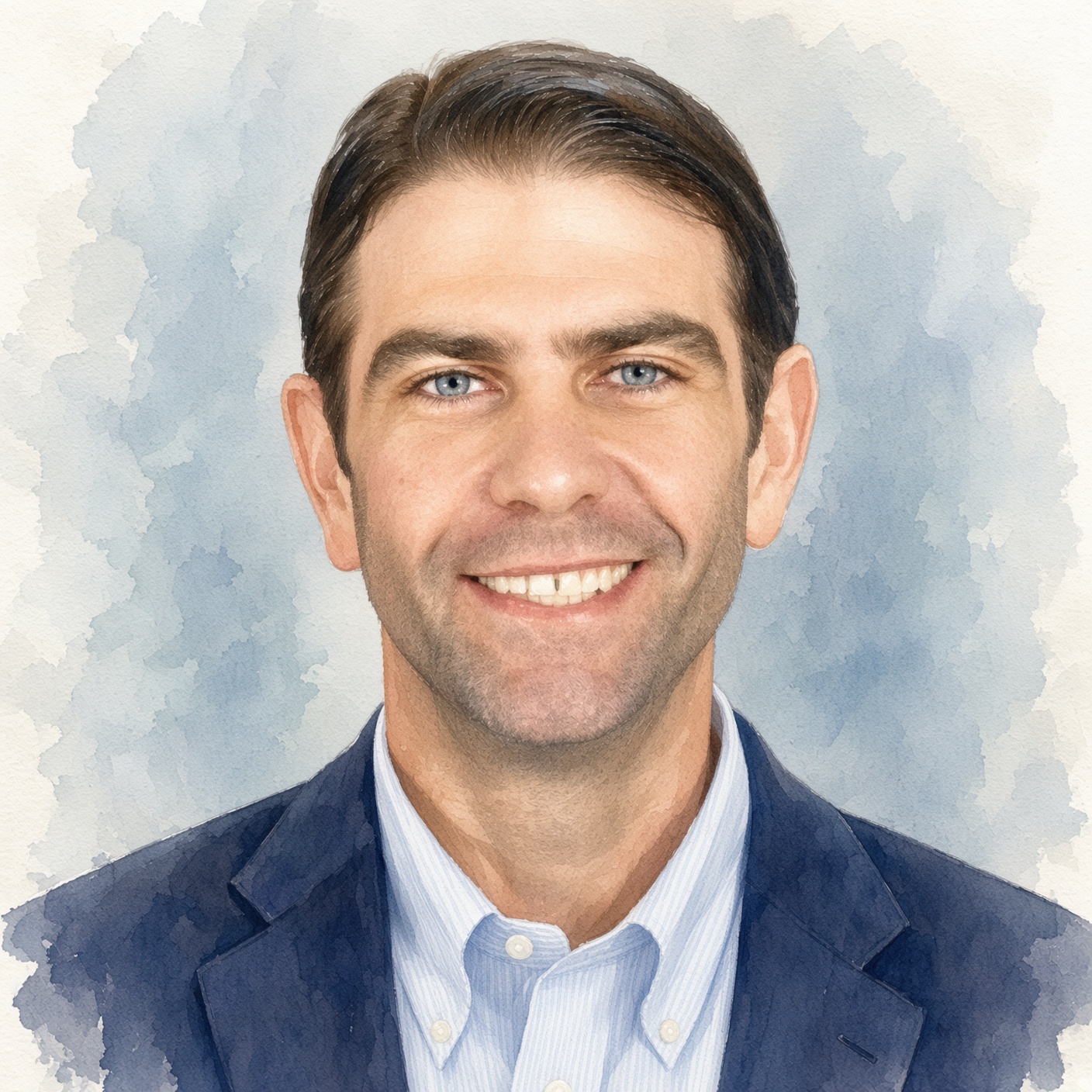
Jamie Cohen
Chief Digital Officer · Salem Media
- Strategy
- Company
- Salem Media
Related episodes
 65:23Mental Toughness · Ep 10From Managed to Modern: Evolving the MSP Channel with Juan FernandezJuan Fernandez · Co-Founder & CEO · MSP-aaSMore from the show
 44:10Accountability · Ep 9Mentorship and the Generational Gap with Quang DoQuang Do · Partner · RevEng ConsultingMore from the show
 44:59Mental Toughness · Ep 8Betting on Yourself: Resilience and Reinvention with Heather MonahanHeather Monahan · Founder · Boss In HeelsMore from the show
 32:28Strategy · Ep 7Evolving Inside a Software Giant with Carson HeadyCarson Heady · Author & Sales Leader · MicrosoftSame pillar: Strategy